Before You Hire, Check Twice: Introducing Plane’s Worker Classification Tool
Our new tool helps you prevent frightful fines and compliance nightmares.
Author

Last Update
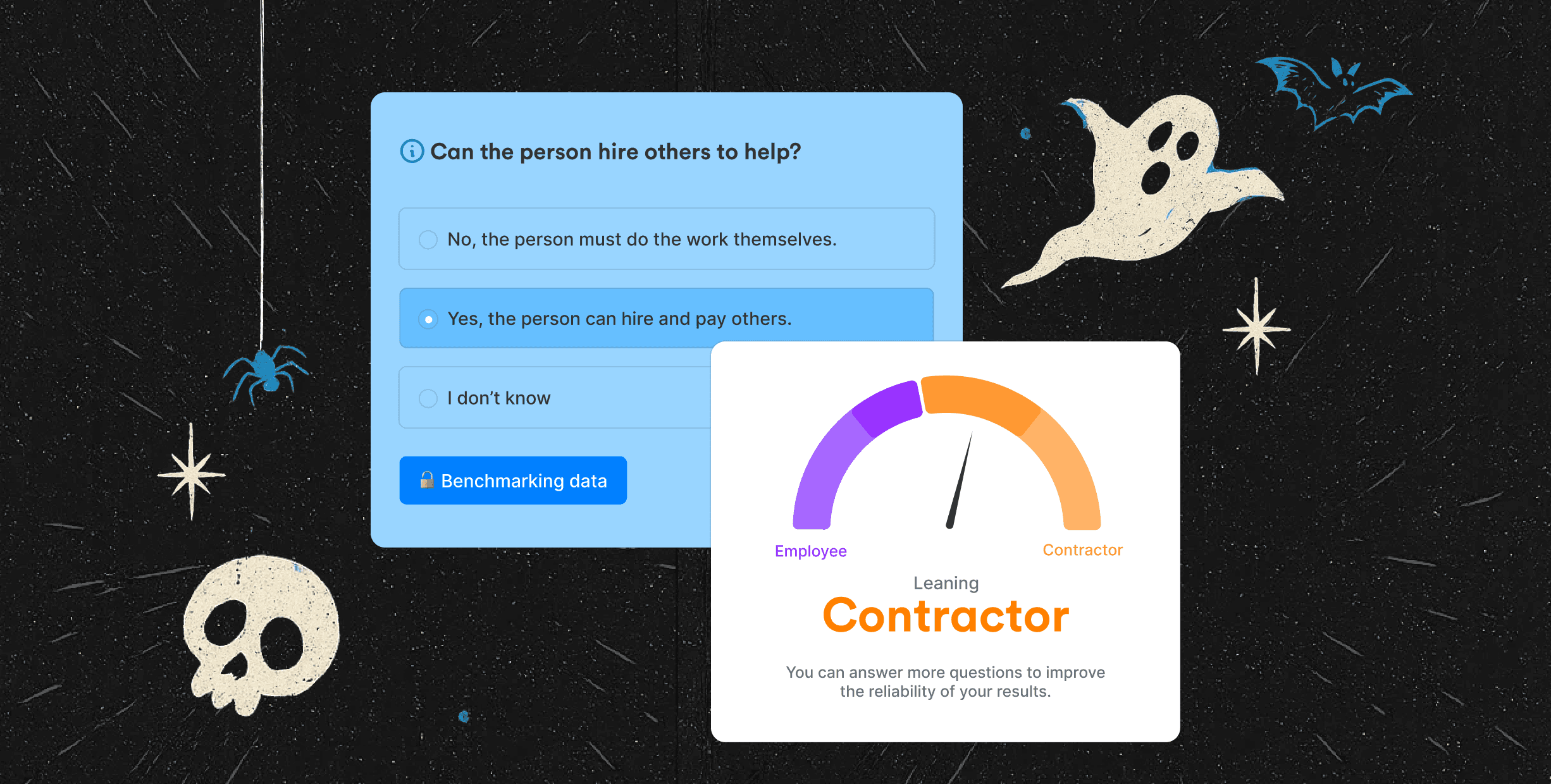
Table of Contents
Loading headings...
It usually starts with a single hire.
A developer in Berlin. A designer in Mexico City. A contractor to help get a new project out the door faster. There’s a conversation about budget. Maybe a quick contract. And just like that, they’re onboarded.
But here’s the thing most companies don’t realize until it’s too late:
How you classify that worker — contractor or employee — isn’t just a formality. It’s a legal decision with real consequences.
When you get it right, you move fast and stay compliant. When you get it wrong? You open the door to audits, fines, penalties, legal fees, and even reputational damage. In some cases, those consequences can stretch into the hundreds of millions of dollars.

Have an HR workflow you want to solve with AI?
Tell us what you're stuck doing by hand. If it's a good fit, we'll build it for free.
So what is worker classification?
Worker classification is the process of determining whether someone should legally be treated as an employee or an independent contractor. Sounds simple enough — but it’s not.
It’s not based on what you call the role, or whether you want them on payroll. It’s based on how the person actually works and what the law says in the region they’re working in.
That includes things like:
How much control you have over their hours or workflow
Whether they can work for other clients
If they use your tools and systems
How central their work is to your business
And every country (and in some cases, every state) has its own tests to determine the correct classification. You might think you’ve hired a contractor — but if they work like an employee, the government might disagree.
Why it matters more than ever
In a globally distributed world, these lines get blurry — fast. Startups and scaling teams hire contractors to move faster, skip red tape, and avoid the overhead of onboarding full-time employees. And in many cases, that works — if the classification is correct.
But as remote work has become the norm, tax authorities and labor agencies are paying closer attention. And when they find a misclassified worker, the consequences are real:
Unpaid taxes
Backdated benefits
Fines and penalties (per worker)
Legal settlements or class actions
Reputational damage
Even personal liability for company directors in some regions
What companies get wrong
The most common mistake? Assuming that just because a worker is part-time, remote, or outside the country — they must be a contractor.
But that’s not how classification works. You can have full-time contractors. You can have part-time employees. You can even have someone in a different country who still legally qualifies as an employee under local labor laws. What matters isn’t how you define the relationship. It’s how the law sees it.
And that’s where things get tricky — because the rules are complex, inconsistent, and often unclear to non-lawyers.
8 public examples of misclassification gone wrong
If you think this is just a compliance detail, here’s some perspective:
These companies all got worker classification wrong — and paid the price.
Nike
Potential fines: $530 million
Thousands of “temporary” workers were classified as contractors across four countries. Authorities found they should have been employees, creating a massive compliance exposure. Read more →
Romero Remodeling
Fine: $144,000
Hired 192 workers as independent contractors on construction jobs in Pennsylvania. The Department of Labor fined the company for misclassification violations. Read more →
Force Corp & AB Construction
Penalty: $2.36 million
Found to have misclassified dozens of construction workers in Massachusetts. Required to pay back wages and damages. Read more →
Midwest logistics firm
Settlement: $2.1 million
After nearly 10 years of litigation over contractor misclassification, the company agreed to a multi-million dollar settlement. Read more →
East Coast transport company
Settlement: $5.75 million
Long-running classification case involving drivers who were misclassified as independent contractors. Read more →
Drywall company (Pennsylvania)
Fine: $32,250
Misclassified 43 workers as contractors. Read more →
The pattern is clear: it’s easy to get this wrong. And expensive to clean up.
So how do you get it right?
That’s why we built Plane’s Worker Classification Tool — a fast, simple way to figure out whether your next hire should be a contractor or employee.
Here’s how it works:
You answer a short set of questions about the role
We analyze risk factors based on legal frameworks
You get a clear classification recommendation — and why it matters
It’s designed to help HR, People Ops, Finance, and hiring managers move faster, with confidence that they’re making the right call.
No spreadsheets. No blind guesswork. Just clarity.
Before you onboard that next contractor or employee…
Run them through the classification tool. It takes less than 3 minutes — and could save you months of legal cleanup.
In a world where one misclassified worker can trigger a lawsuit, an audit, or a multi-million dollar penalty… Checking first is just smart business.