Author

Last Update

Table of Contents
Loading headings...
You’ve incorporated a U.S. company — often a Delaware C‑Corp — but you live and work outside the United States. At some point, you need to move money from the company to you. That sounds straightforward until you hit the reality: the “how” matters, and it affects withholding, reporting, and how both the IRS and your home country treat the income.
Below are three practical paths founders use most often, what paperwork typically comes with each, and potential traps that show up when things get busy.
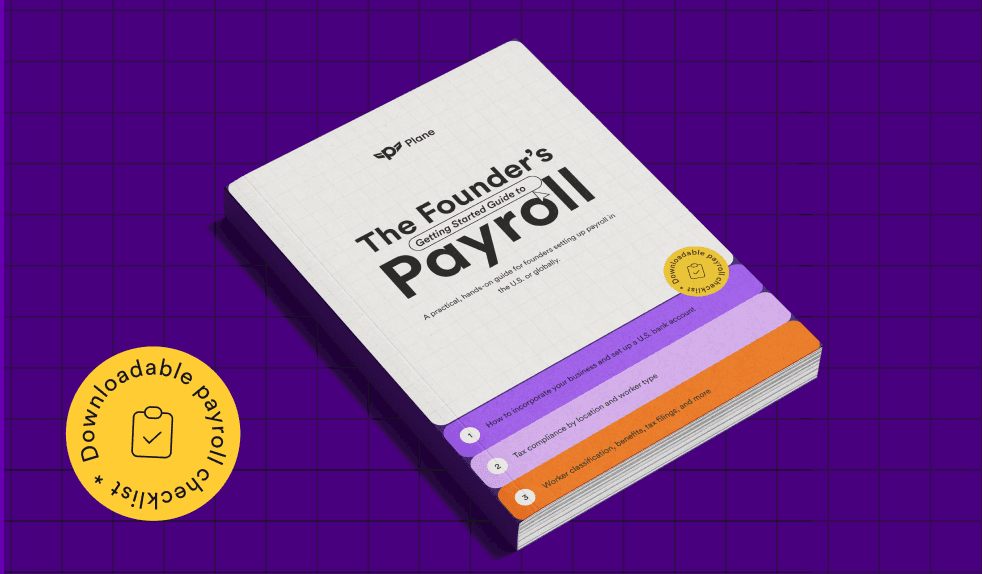
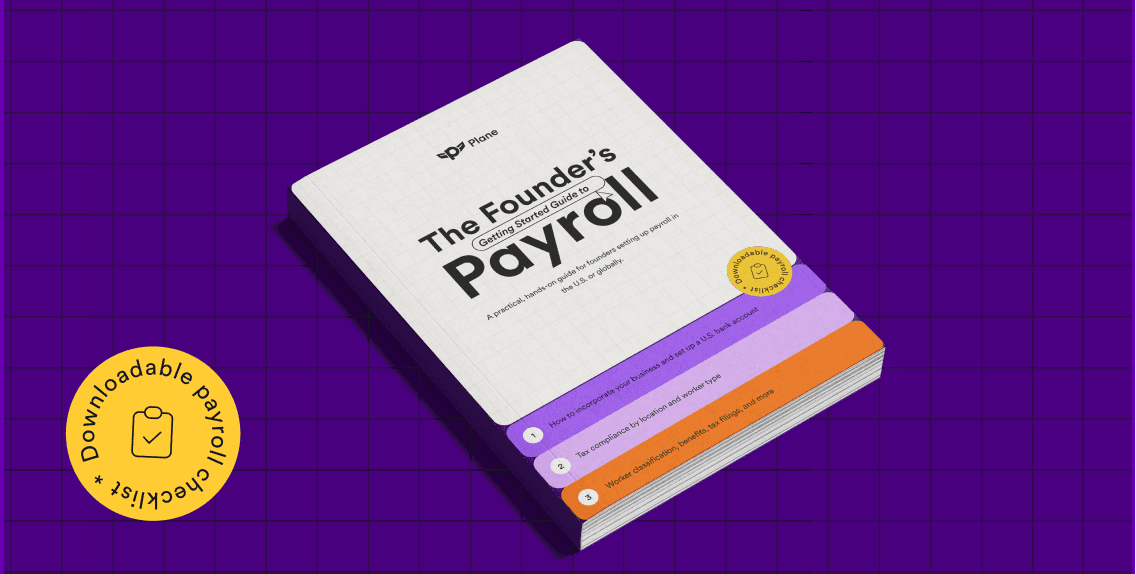
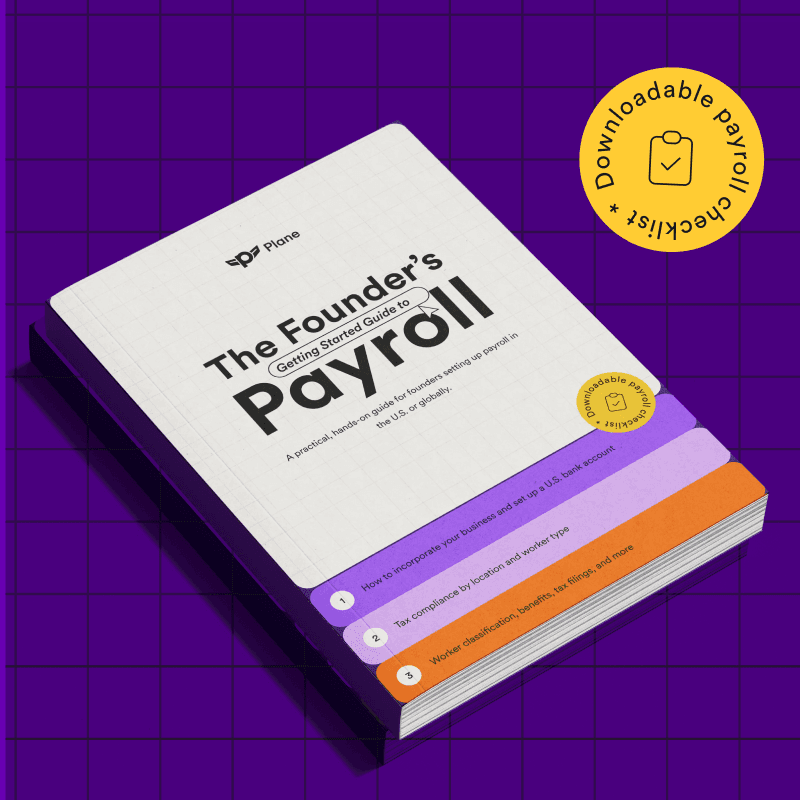
Understanding payroll from day one.
Read our Founder’s Guide to Getting Started.
The three main ways to pay yourself
International founders generally use one (or a mix) of the following:
Contractor payments (common early on)
Salary as an employee (more setup, more ongoing compliance)
Dividends (usually later, and usually with withholding)
Each route changes (a) whether the payment is treated as compensation or investment return, (b) what your company has to collect from you, and (c) what the company has to file with the IRS.
Option 1: Pay yourself as a contractor
For many early-stage international founders, contractor payments are the simplest way to get started. Your U.S. company pays you for services — either as an individual or through a foreign entity you control — under a services agreement.
Why new founders might choose this option
Contractor payments tend to work well when you’re moving fast and trying to keep overhead low:
You can start without setting up U.S. payroll.
Your company can pay invoices like any other vendor.
If the services are performed outside the United States, the income is typically treated as foreign-source services income, which generally isn’t subject to U.S. withholding in the same way as U.S.-source income. The IRS addresses this directly in its guidance on foreign-source income and when Form 1042‑S reporting is not required.
That last point is the nuance founders miss: for services, where the work is performed is a core part of sourcing.
Also, while choosing the contractor option may be tempting, you’ll want to look carefully into classification rules. If you classify a worker as a contractor without a reasonable basis, you can be held liable for employment taxes and other potential penalties. We discuss this in more detail below.
The form your company should collect: Form W‑8BEN
Before your company pays you as a foreign individual, it should collect a valid Form W‑8BEN and keep it on file. The IRS describes Form W‑8BEN as the certificate a foreign person uses to confirm foreign status and, if applicable, claim treaty benefits.
A few practical notes founders appreciate once they’ve been through it:
The form is generally valid through December 31 of the third year after you sign it (unless circumstances change). Plan to refresh it on a calendar, not when the bank rejects a payment.
If your country has a tax treaty with the United States, the IRS treaty pages and treaty tables are the place to confirm whether a reduced rate or exemption applies. Part II of the W‑8BEN is where treaty claims are typically made.
What happens if you don’t have a W‑8BEN on file
If your company can’t document your foreign status properly, the default approach often becomes conservative and expensive: withholding can apply at 30% on certain payments. In practice, this usually shows up as a finance or payroll provider insisting on withholding (or refusing payment) because the file is incomplete.
The fix is boring but effective: get the W‑8BEN in place early, and store it with your corporate records.
Option 2: Pay yourself as an employee
Sometimes you want (or need) founder payroll. That’s reasonable, but it’s not just a decision inside your U.S. cap table. If you live outside the United States and want to be treated as an employee where you reside, you’re stepping into local employment rules, local payroll withholding, and potentially corporate tax presence questions.
The real challenge: Local employer compliance
To employ you in your home country directly, your U.S. company needs to:
Set up a local entity,
Run compliant local payroll (income tax and social contributions),
Follow local employment rules around benefits, termination, and documentation.
This is also where “permanent establishment” risk starts entering the conversation in a serious way. Even when you’re only hiring (or employing) one person — yourself — some countries may take the view that the company has created enough local presence to trigger employer obligations or tax exposure.
Common workaround: Employer of record (EOR)
A common way founders handle this is by using an employer of record (EOR). The EOR has a local entity in your country, so you don’t have to set one up. They become the local legal employer, run local payroll, and handle local compliance, while you work day-to-day for your U.S. company.
This is usually simpler operationally than registering a foreign employer in-country, but it adds cost and introduces another party into your employment chain. Whether it’s worth it depends on your goals and constraints.
When being an employee tends to make sense
Founder payroll is usually the right tool when:
You need formal employment for residency, benefits, or personal planning reasons,
Investors expect a more traditional salary arrangement,
You’re preparing for a move to the United States (where U.S. payroll and personal tax filing may become unavoidable).
If you’re choosing payroll mainly because “it feels more official,” it’s worth pressure-testing whether contractor payments get you to the same place with fewer moving parts.
Option 3: Dividends
Dividends are a legitimate way to take money out of a C‑Corp — but they’re often a blunt instrument for international founders, especially early.
Why dividends are often inefficient early on
Dividends paid by a U.S. corporation to a foreign shareholder commonly trigger U.S. withholding, often at 30% unless a tax treaty reduces the rate. The company withholds and remits that amount to the IRS, and you receive the net dividend.
Then you may still have to report that dividend in your home country (and potentially pay additional tax there), depending on local rules.
In other words: dividends can introduce withholding and double-tax complexity at the exact moment you’re trying to keep things simple.
When dividends can make more sense
Dividends tend to be a later-stage lever, typically after:
Services are already being paid at reasonable, supportable rates (salary or contractor fees),
The company has the cash and reporting discipline to handle withholding correctly,
You’ve confirmed the treaty position and the filing requirements that come with dividend payments.
What your U.S. company may need to file (depending on how you pay yourself)
This is where many founders get tripped up: your personal choice (contractor vs payroll vs dividends) changes what the company must collect and report. Even if you’re the founder, the company still has to behave like a payer.
Keep Form W‑8BEN on file
If you’re being paid as a foreign individual, your company should collect and retain the W‑8BEN. Operationally, treat it like a required vendor onboarding document, because that’s what it becomes in an audit.
Form 1042‑S: information reporting for certain payments to foreign persons
The IRS explains that withholding agents use Form 1042‑S to report certain U.S.-source income paid to foreign persons and other amounts subject to reporting. Whether you need to file it depends on what’s being paid and how it is sourced.
The key point: don’t assume “international founder” automatically means “no U.S. forms.” The filing obligation turns on the character and source of the payment.
Form 1042: annual withholding tax return (when withholding applies)
If your company withholds U.S. tax on payments to foreign persons, Form 1042 is the annual return used to report that withholding. The IRS’s Form 1042 materials cover when it’s used and what it reports, and third-party summaries commonly note the typical due date as March 15 following the calendar year of payment.
If you’re paying dividends, this is the bucket you’re more likely to end up in.
Tax ID numbers: What you (and the company) actually need
Your company needs an EIN
Your U.S. company will need an EIN to operate like a normal U.S. corporation: banking, payments, and tax filings.
International founders often discover the practical constraint after the fact: many international applicants can’t use the IRS online EIN application flow. Instead, you’ll need to apply via phone, fax, or mail from abroad.
You may or may not need an ITIN
An ITIN is an individual tax number, not a business identifier. The IRS issues ITINs so individuals who aren’t eligible for an SSN can still file U.S. tax documents when required.
You may need an ITIN if, for example:
You end up with U.S.-source income that requires a personal filing,
You’re claiming treaty benefits that require a U.S. taxpayer identification number,
A bank or payment processor requires one as part of onboarding.
The IRS outlines how to apply for an ITIN from abroad, including the use of Form W‑7 and submission paths through certain acceptance agents or in-person appointments.
A common mistake: Staying a “full-time contractor” forever
Contractor payments are popular because they’re simple. The risk is when the reality of the relationship looks like employment — especially over time.
Misclassification isn’t just a theoretical HR problem. It can create tax, labor, and compliance consequences in both the United States and your home country.
Misclassification risk in the United States
U.S. agencies look at the substance of the relationship — control, dependence, and the nature of the work — not just what the contract says. Legal commentary around U.S. Department of Labor enforcement highlights that employers should be cautious where contractors work like employees for extended periods or do the same work as employees.
Misclassification risk in your home country
Separately, your local tax or labor authority may determine that you’re effectively an employee. This can open the company to employment tax exposure, penalties, and broader corporate presence questions.
Practical signs you’re drifting into employee territory
These aren’t perfect tests, but they’re common signals in audits:
You work only for the company, full time, indefinitely.
The company dictates your hours, tools, and process like it would for staff.
You’re integrated into the business like an internal team member rather than a service provider.
If that sounds like your day-to-day, it may be time to revisit the structure before an investor, a bank, or an authority forces the issue.
A practical path many early-stage founders follow (and why)
Founders often ask for a “default plan.” There isn’t one that fits everyone, but there is a pattern that tends to minimize friction early while keeping you on solid footing.
Early stage (often year 0–1): Keep it simple, keep it clean
Some international founders start with contractor payments because it’s operationally lightweight. If you go that route, the clean version looks like this:
Paper the relationship properly. Use a contractor agreement between you and the company that describes the services, scope, and payment terms in plain language.
Set a rate you can defend. It doesn’t need to be perfect, but it should be reasonable and documented. If you ever need to explain it, “we picked a number” is not a great story.
Get the W‑8BEN in place early. Your company should treat it like a prerequisite to payment, not an afterthought.
Keep the company’s reporting obligations on your radar. If a payment is U.S.-source or subject to withholding, your company may have 1042‑series filings. This is an area where a short call with a cross-border tax advisor can prevent a long cleanup later.
The goal in year one isn’t sophistication. It’s avoiding unforced errors while you’re trying to build.
As you scale: Choose structure for the reality you’re in
As the company grows, the “contractor forever” approach can start to mismatch the operational reality, especially if you raise money, hire a team, or want more formal founder compensation.
At that point, founders commonly do one of three things:
Move to local employment via an EOR to make payroll and benefits straightforward where they live.
Plan a transition to U.S. payroll if relocation is on the roadmap.
Consider dividends later once compensation is structured, cash flow is stable, and withholding/treaty mechanics are confirmed.
What changes at scale isn’t just tax. It’s expectations: investors, auditors, banks, and payment providers tend to prefer clean, standard patterns.
Permanent establishment: The risk to keep in view
“Permanent establishment” is one of those topics that gets treated like a bogeyman. It’s better handled as an operating constraint.
In plain terms, a permanent establishment is a threshold under many tax treaties that can cause a company to be treated as having a taxable presence in another country, often tied to having a fixed place of business or conducting business through certain dependent activities.
If you’re living abroad while running a U.S. company, the practical takeaway is simple: be thoughtful about what your company does in your home country in a way that looks like “the company is set up here.” That can include office arrangements, local signing authority, and the overall facts of how business is conducted.
(Details are country-specific, and treaty language matters, so treat this as an area to verify rather than guess.)
What founders typically do next
If you want a clean, operator-grade checklist, it usually looks like:
Collect and file Form W‑8BEN for the founder-payee (and renew it on schedule).
Put a contractor agreement in place if paying as a contractor.
Choose a payment method your bank and accounting workflow can support (wire, Wise, Mercury, or a payroll platform like Plane).
If anything is unusual — multiple residencies, work performed in the United States, meaningful dividend plans — talk to a cross-border tax advisor before you start paying regularly.
Revisit the setup at predictable moments: fundraising, hiring your first local employee, relocating, or switching compensation style.
For a complete checklist, download The Founder’s Getting Started Guide to Payroll. You’ll learn how to set up payroll from incorporation onward, pay contractors and employees correctly across borders, and avoid common mistakes that can become compliance nightmares.
Legal disclaimer: The information provided is for informational purposes only and should not be considered legal advice.
Want product news & updates?
Sign up for our newsletter.